
The corporate landscape is undergoing a dramatic transformation. Gone are the days when office buildings were merely functional boxes of concrete and glass. Today’s most innovative companies understand that exceptional architecture doesn’t just house employees, it inspires them, attracts top talent, and makes bold statements about organizational values and vision.
Modern office building design has evolved into an art form that balances aesthetics with sustainability, functionality with creativity, and tradition with cutting-edge innovation. From biophilic designs that bring nature indoors to futuristic structures that seem to defy physics, contemporary office architecture is pushing boundaries and reimagining what the workplace can be.
This exploration of 15 stunning office buildings from around the globe showcases how visionary architects and forward-thinking companies are creating spaces that don’t just accommodate work, they elevate it. These structures represent the pinnacle of design innovation, environmental consciousness, and human-centered thinking that’s shaping the future of where and how we work.
1. The Spheres at Amazon Headquarters (Seattle, USA)
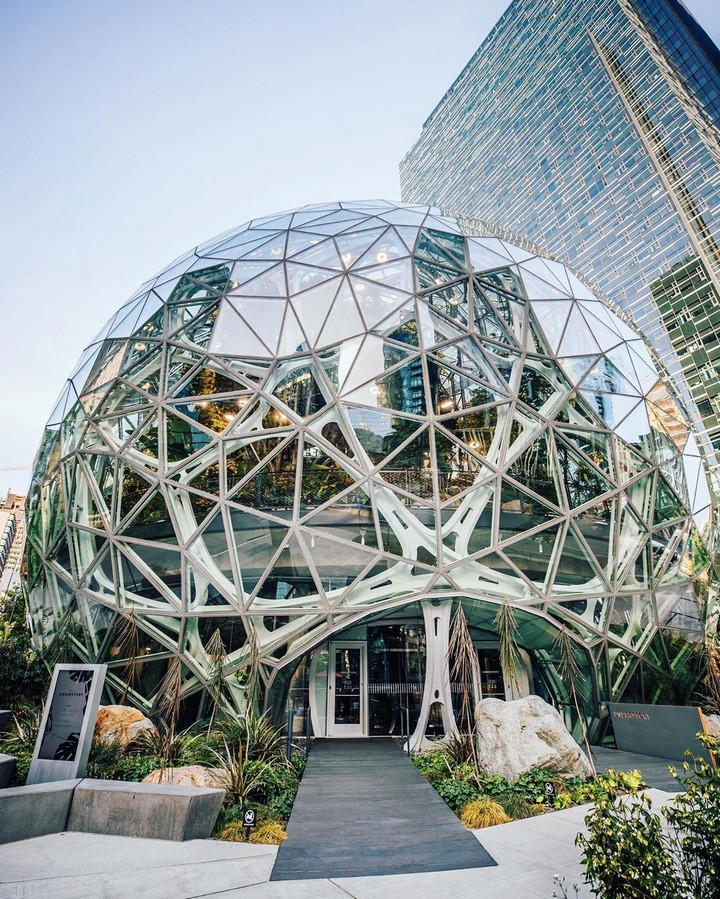
Amazon’s headquarters features three interconnected glass domes that house over 40,000 plants from around the world. This biophilic masterpiece by NBBJ architects creates a cloud forest environment where employees can work, meet, and think creatively. The spherical structures rise five stories high and maintain consistent temperature and humidity levels to support the lush vegetation inside. This design philosophy recognizes that connecting workers with nature boosts creativity, reduces stress, and enhances overall wellbeing, a principle that’s revolutionizing office design worldwide.
2. Apple Park (Cupertino, USA)
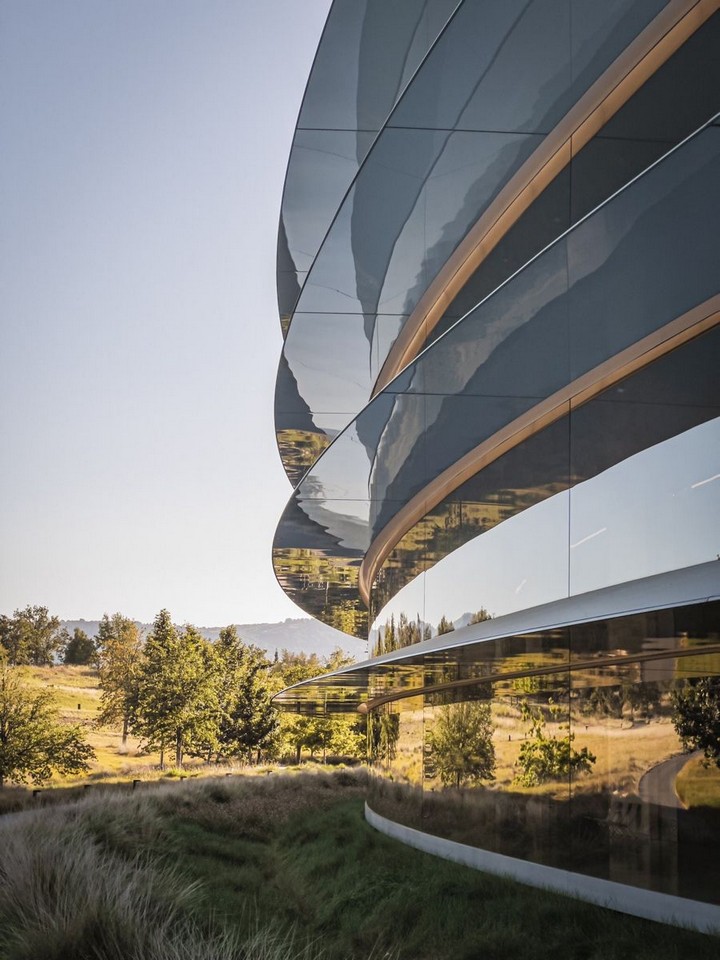
Dubbed the “spaceship campus,” Apple Park is a circular marvel spanning 2.8 million square feet. Designed by Foster + Partners, this ring-shaped structure features the world’s largest panels of curved glass and sits amid 175 acres of drought-resistant trees and plants. The building’s circular design promotes collaboration while the extensive landscaping creates a serene environment that reflects Apple’s commitment to environmental responsibility. Every detail, from the custom-designed door handles to the ventilation system that allows natural airflow nine months of the year, embodies Apple’s obsession with perfection.
3. The Edge (Amsterdam, Netherlands)
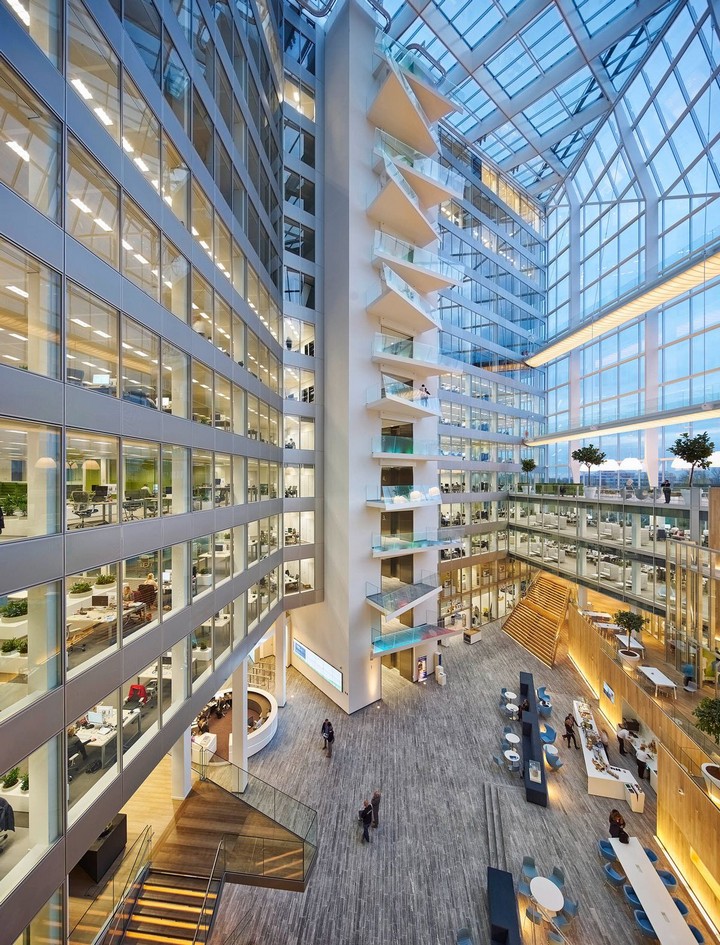
Often called the world’s smartest and greenest office building, The Edge by PLP Architecture uses an array of sensors and smart technology to create an ultra-efficient workspace. The building generates more energy than it consumes through solar panels covering the roof and south-facing facade. Its intelligent lighting system responds to individual preferences and occupancy, while the app-based system helps employees find available desks, meeting rooms, and even parking spaces. The building’s BREEAM score of 98.4% made it the most sustainable office building ever constructed at the time of completion.
4. Salesforce Tower (San Francisco, USA)
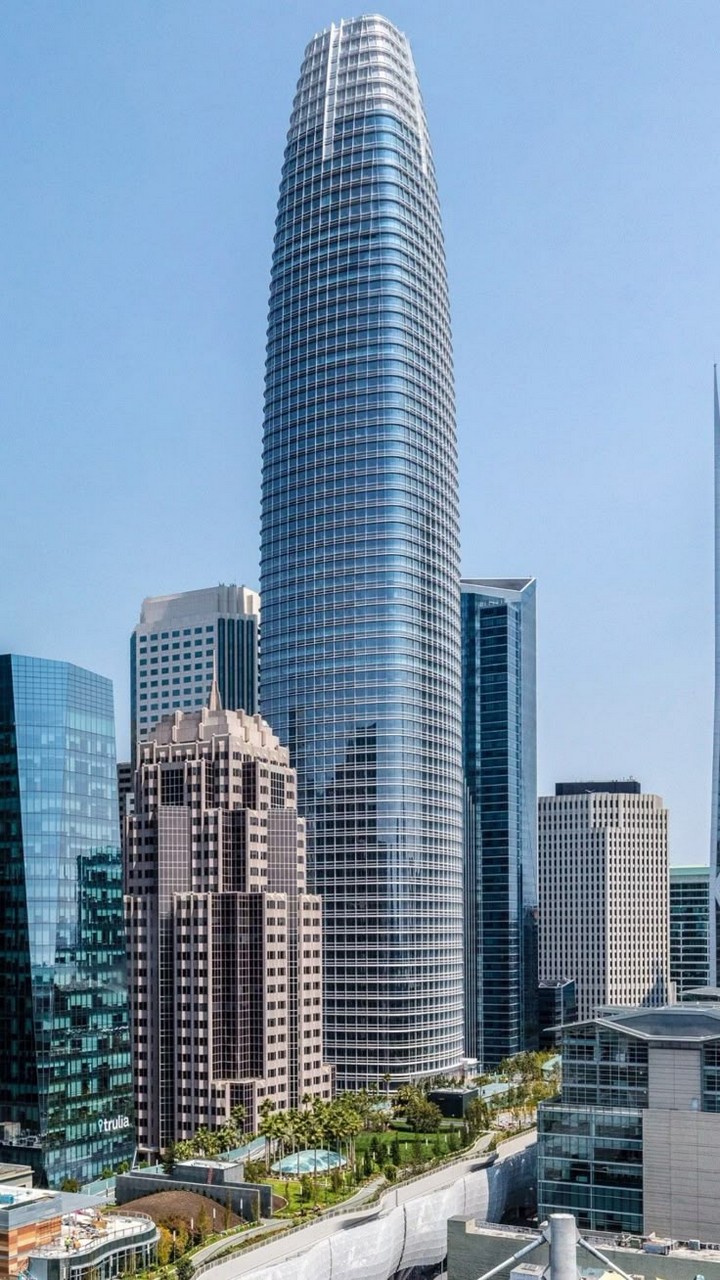
Rising 1,070 feet above San Francisco, Salesforce Tower by Pelli Clarke Pelli Architects is the tallest building in the city and a beacon of sustainable design. The tower features a sophisticated water recycling system that captures and treats rainwater and building water for reuse in the building’s cooling system and toilets. Floor-to-ceiling windows maximize natural light while high-performance glass reduces heat gain. The building’s design creates a striking silhouette on the San Francisco skyline while setting new standards for energy efficiency in high-rise construction.
5. Pixel Building (Melbourne, Australia)
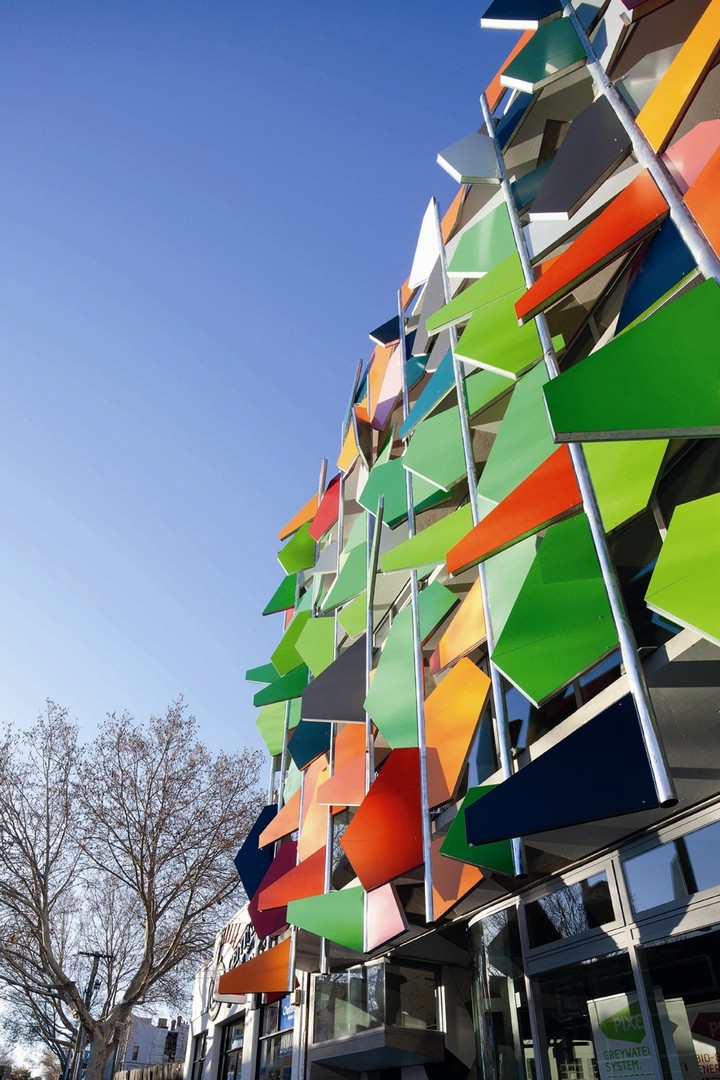
The Pixel Building lives up to its name as Australia’s first carbon-neutral office building. This colorful, pixelated facade isn’t just visually striking—it’s highly functional. The building features wind turbines, solar panels, a vacuum waste system, and water harvesting technology. The playful exterior design uses bright, varied colors on prefabricated panels, creating a dynamic appearance that changes with the viewing angle and lighting conditions. Studio505’s design proves that sustainability and visual appeal aren’t mutually exclusive.
6. Linked Hybrid (Beijing, China)
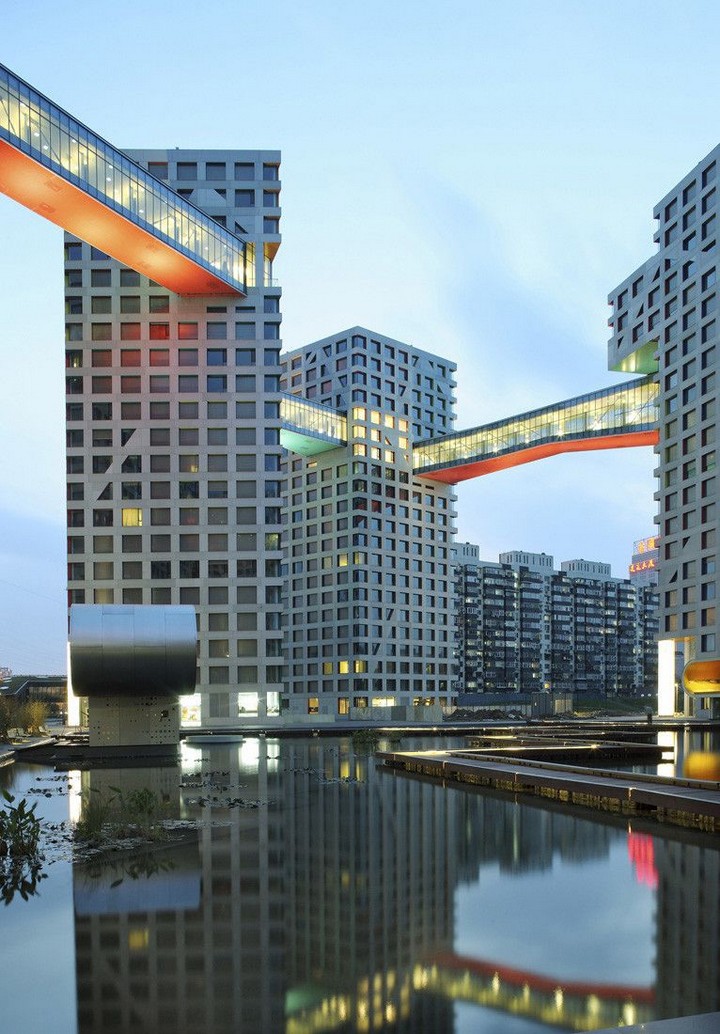
Steven Holl Architects created this interconnected complex of eight towers linked by sky bridges that contain communal spaces, pools, and gardens. The building’s ground-source geothermal system for heating and cooling was one of the largest residential installations in China when completed. The porous design allows for natural ventilation and creates public spaces that blur the boundaries between work, living, and community interaction. This hybrid approach to urban development represents a new model for mixed-use architecture in dense cities.
7. Hearst Tower (New York, USA)
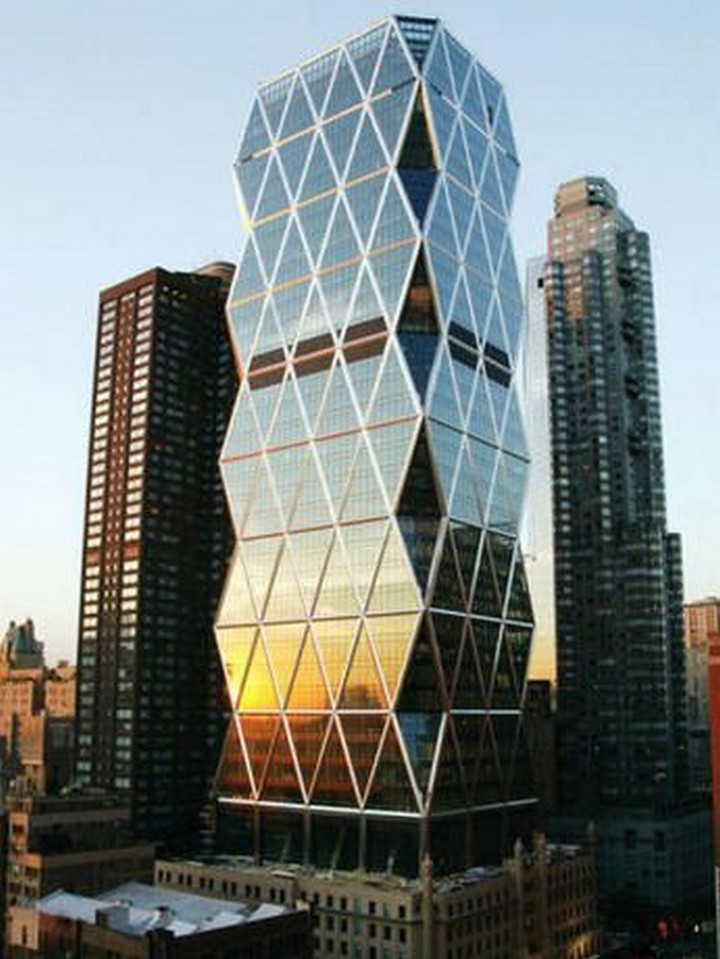
Foster + Partners transformed the historic Hearst Magazine Building with a dramatic glass and steel tower that seems to grow organically from the original 1920s structure. The diagrid structural system, a diagonal grid of steel tubes, reduces the building’s steel requirements by 20% compared to conventional framing. The tower’s innovative design earned it the first Gold LEED certification for a New York City office building. The dramatic atrium featuring a water sculpture called “Icefall” creates a stunning transition space between the historic base and modern addition.
8. Crystal Houses (Amsterdam, Netherlands)
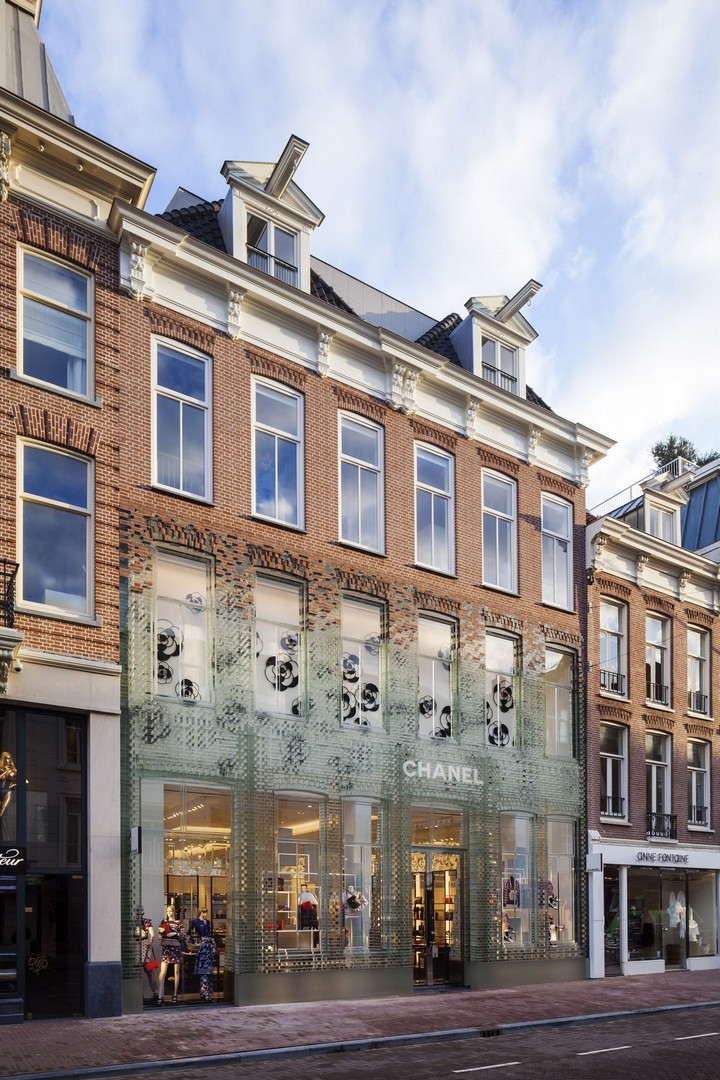
MVRDV’s Crystal Houses features a transparent brick facade made from solid glass bricks and transparent mortar, creating a seamless connection between historic architecture and modern innovation. The ground floor appears to dissolve into glass, creating an ethereal effect that attracts attention while respecting the historical context of Amsterdam’s shopping district. This technical innovation required developing a new type of glass brick and adhesive strong enough to support the structural load while remaining transparent, a feat that took years of research and development.
9. Oasia Hotel Downtown (Singapore)
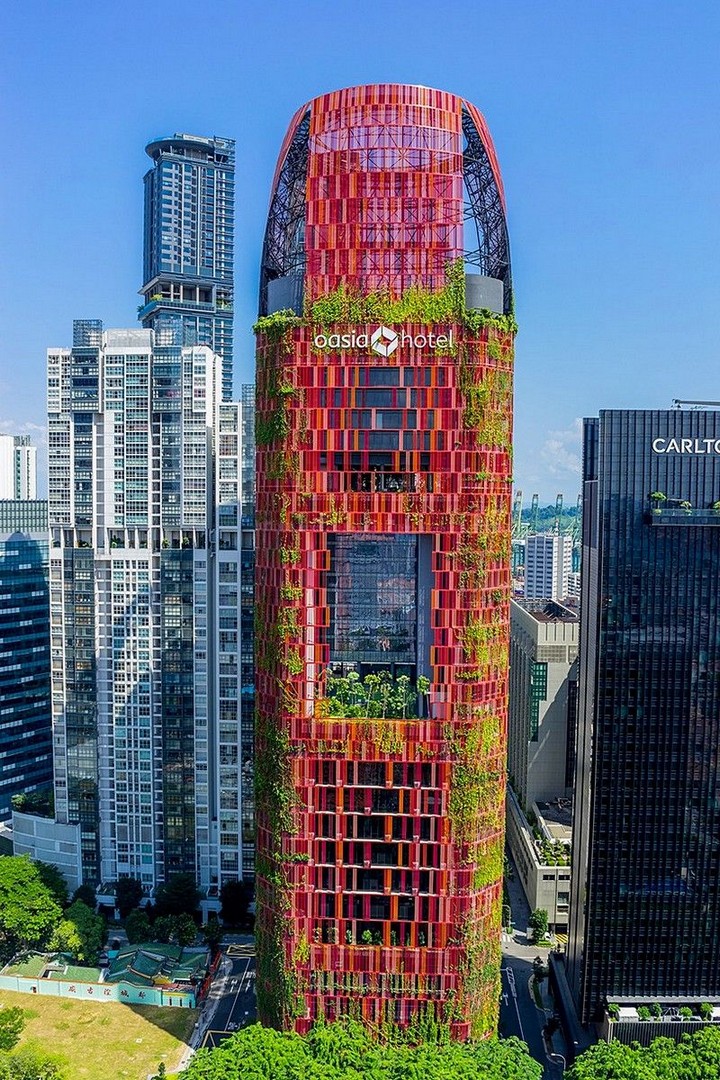
WOHA Architects designed this tower as a “living” building with a red aluminum mesh facade that supports climbing plants across 21 floors. The building features multiple sky gardens distributed throughout its height, creating green spaces and natural ventilation at various levels. This vertical garden approach increases biodiversity in Singapore’s dense urban core while reducing the building’s heat absorption. The permeable facade allows for natural airflow, significantly reducing cooling costs while creating a distinctive silhouette on the skyline.
10. Commerzbank Tower (Frankfurt, Germany)
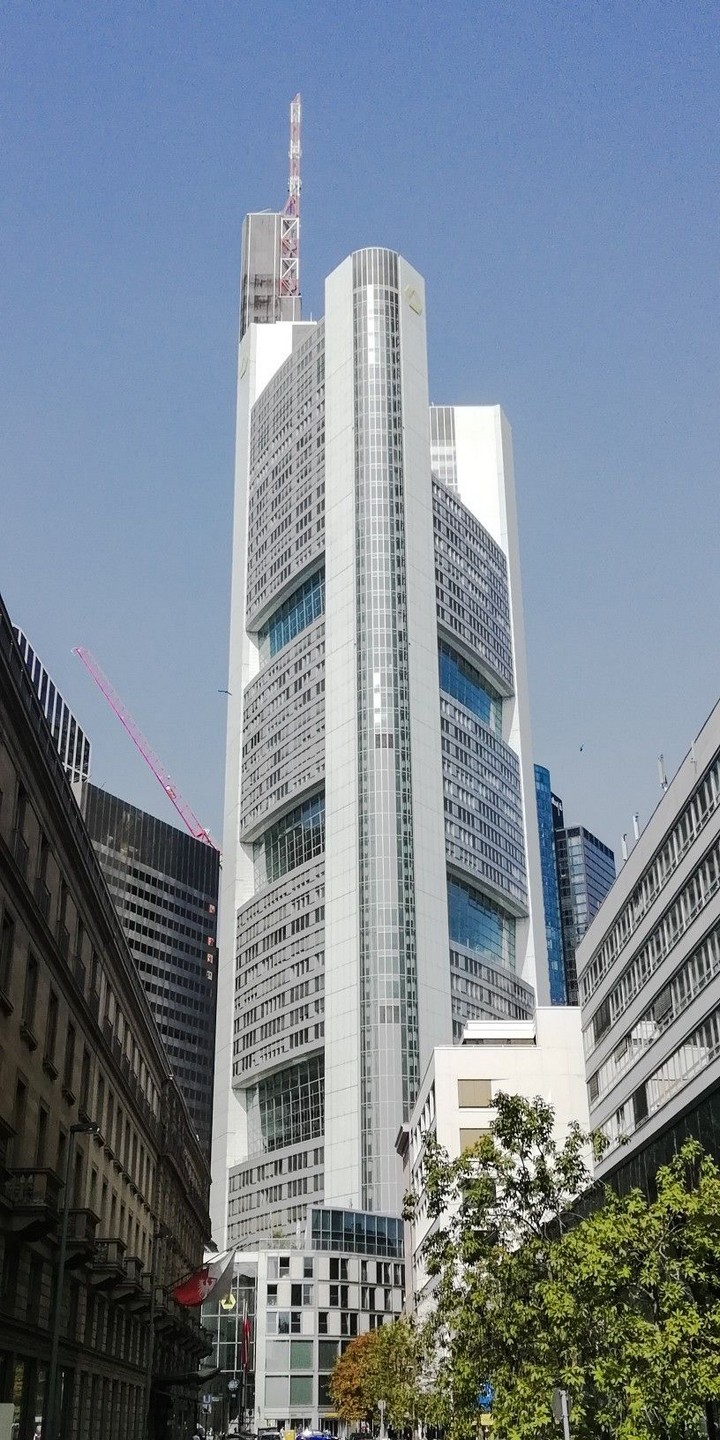
Foster + Partners’ Commerzbank Tower pioneered the concept of the ecological high-rise. When completed in 1997, it was Europe’s tallest building and the world’s first ecological office tower. The triangular floor plan creates three-story sky gardens that spiral up the building, bringing natural light and ventilation to interior spaces. The building’s natural ventilation system allows windows to open on 60% of the year, significantly reducing energy consumption. This groundbreaking design proved that environmental responsibility and striking architecture could coexist in commercial development.
11. Diagonal ZeroZero (Barcelona, Spain)
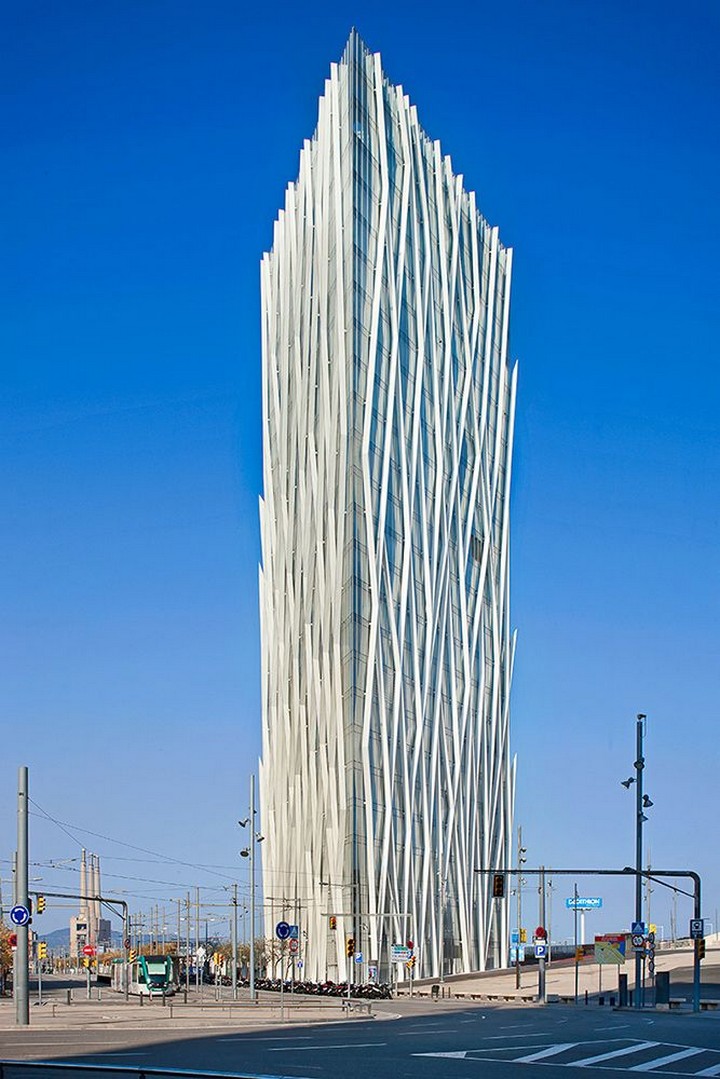
This crystalline tower by EMBA Architects features a distinctive diagonal grid facade that catches light dynamically throughout the day. The building’s innovative structural system allows for column-free interiors with exceptional flexibility. The geometric glass facade creates constantly changing reflections and shadows, making the building appear different from every angle and at every time of day. The design responds to Barcelona’s climate with sun-shading systems integrated into the facade that reduce solar gain while maintaining transparency.
12. The Gherkin – 30 St Mary Axe (London, UK)
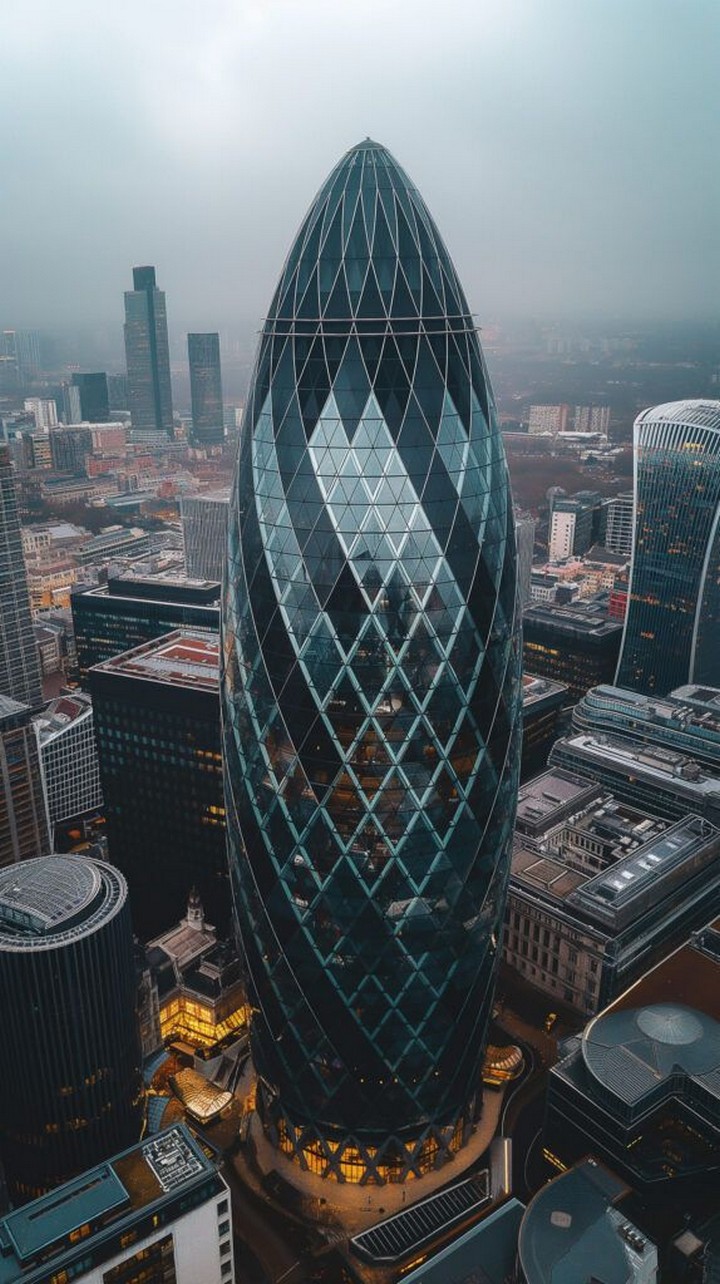
Foster + Partners’ iconic bullet-shaped tower revolutionized London’s skyline with its energy-efficient design wrapped in a distinctive diagrid structure. The building’s aerodynamic form reduces wind deflection, while the spiraling light wells bring natural light deep into the floor plates. The double-glazed facade with blinds in the cavity provides excellent thermal performance. The building uses 50% less energy than a typical office building of similar size, proving that iconic architecture and environmental performance aren’t contradictory goals.
13. Absolute World Towers (Mississauga, Canada)
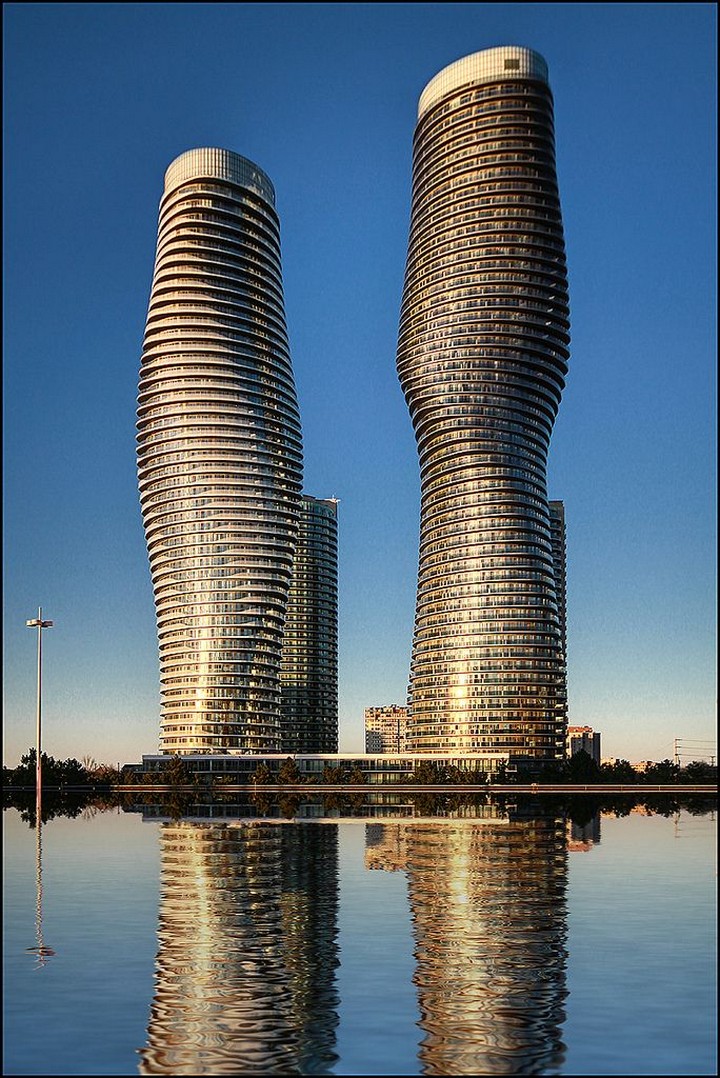
These twisting residential and office towers by MAD Architects earned the nickname “Marilyn Monroe Towers” for their curvaceous profiles. Each floor rotates slightly from the one below, creating a continuous balcony that wraps around the building. This design maximizes views in all directions while creating a sculptural form that’s become an instant landmark. The twisting form also provides structural benefits, allowing the building to better resist wind loads. The towers demonstrate how residential and commercial architecture can be both functional and sculpturally expressive.
14. One Central Park (Sydney, Australia)
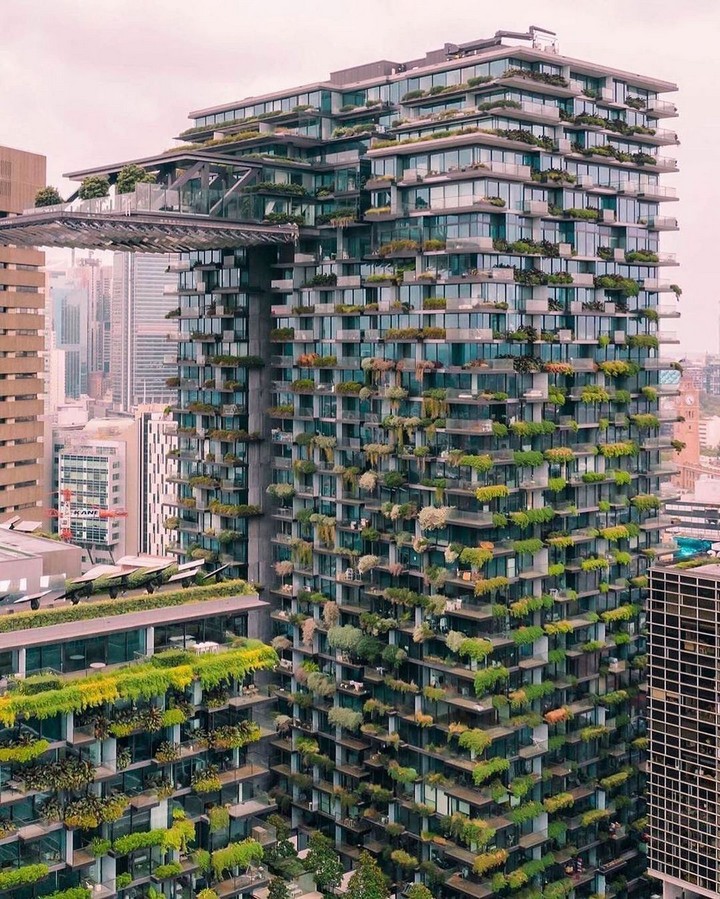
Jean Nouvel’s One Central Park features the world’s tallest vertical garden, designed by botanist Patrick Blanc, covering the building’s facade. The living wall contains 35,200 plants from 383 species, creating a constantly evolving biological artwork. A cantilevered heliostat reflects sunlight into shadowed areas of the vertical garden and adjacent public spaces. This integration of architecture, nature, and innovative engineering creates a building that actively contributes to urban biodiversity while providing premium workspace and residential areas.
15. Bosco Verticale (Milan, Italy)
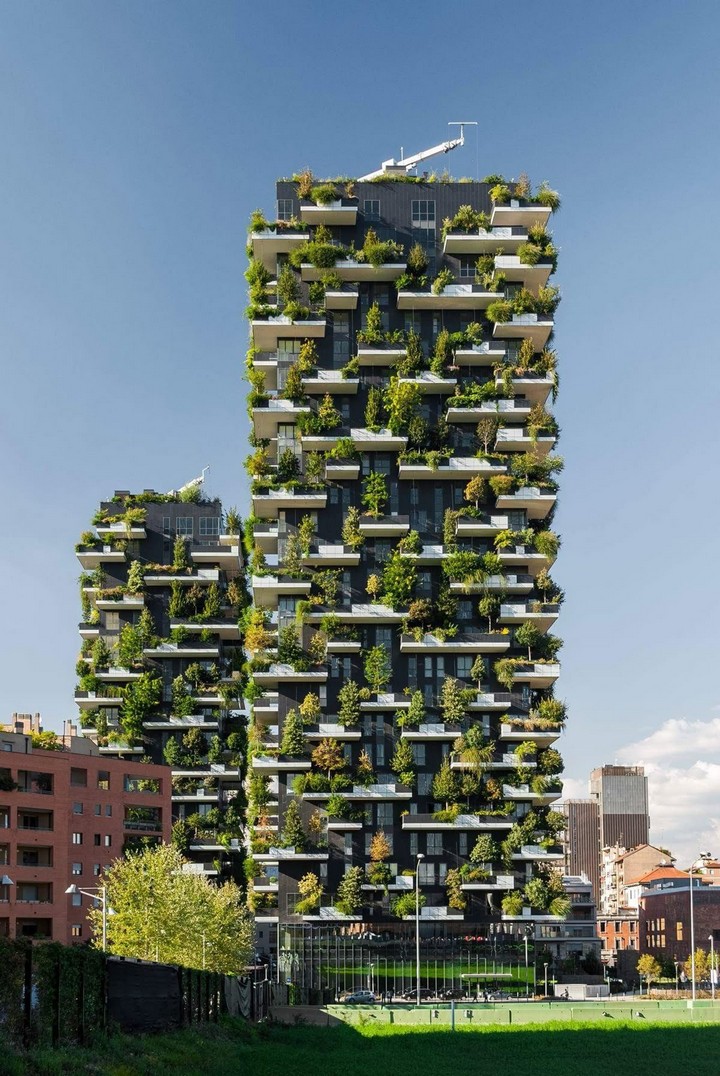
Stefano Boeri Architects’ “Vertical Forest” features two residential and office towers covered with 900 trees, 5,000 shrubs, and 11,000 plants. The vegetation absorbs CO2, produces oxygen, and filters dust particles from the urban environment while providing insulation that reduces energy needs. Each plant was selected for its ability to withstand wind conditions at various heights and oriented according to the façade’s sun exposure. This pioneering approach to high-rise afforestation has inspired similar projects worldwide and demonstrates how buildings can actively contribute to environmental healing.
Which of these stunning office buildings inspired you most? Are you considering innovative design elements for your own workspace or development project? Share your thoughts in the comments below and let us know what architectural features you believe are most important for the future of office design.
If you found this architectural journey inspiring, share this article with colleagues, architects, or anyone passionate about the future of workplace design. For more insights on cutting-edge architecture, sustainable building practices, and workplace innovation, explore our related content on modern design trends and smart building technology. The future of work spaces is being built today, be part of the conversation!