
The architectural landscape of our cities has transformed dramatically over the past two decades, with modern high-rise buildings pushing the boundaries of engineering, sustainability, and aesthetic innovation. These towering structures are no longer merely functional spaces but rather artistic statements that define city identities and showcase humanity’s architectural prowess. Let’s explore nine groundbreaking approaches to modern high-rise architecture that are revolutionizing urban development worldwide.
1. Biophilic Vertical Gardens: Nature Meets Steel
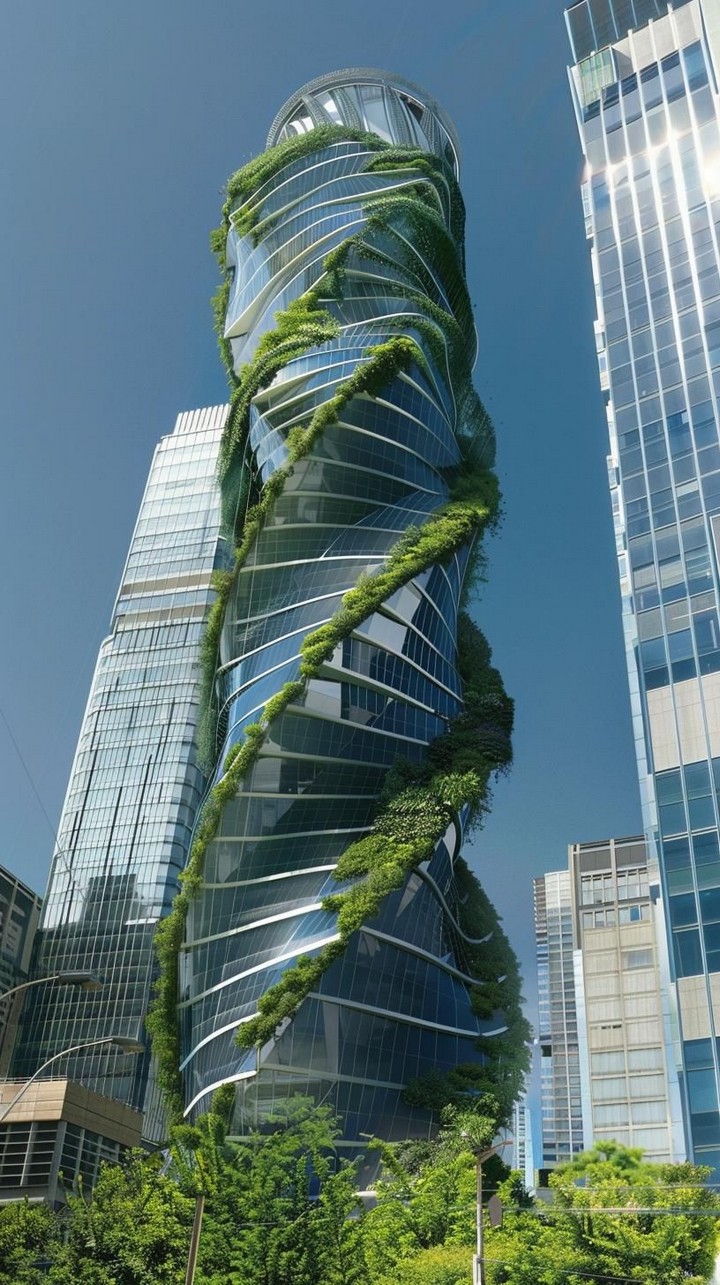
Modern high-rise architecture has witnessed a remarkable shift toward integrating living ecosystems directly into building facades. This biophilic design approach transforms concrete towers into vertical forests, where vegetation cascades down multiple stories, creating breathing ecosystems within urban jungles.
The concept extends beyond mere aesthetic appeal. These green facades serve multiple functional purposes: they reduce urban heat island effects, improve air quality, provide natural insulation that decreases energy consumption, and offer residents psychological benefits through constant exposure to nature. Buildings incorporating this design philosophy feature integrated irrigation systems, specialized growing media, and carefully selected plant species that can withstand high-altitude conditions and varying sun exposures.
Architects implementing this approach must consider structural load requirements for soil and water weight, maintenance accessibility for gardening teams, and sophisticated drainage systems that prevent water damage. The result is a living, breathing structure that evolves with seasons, creating dynamic visual interest while contributing positively to urban environmental challenges.
2. Parametric Design and Organic Forms
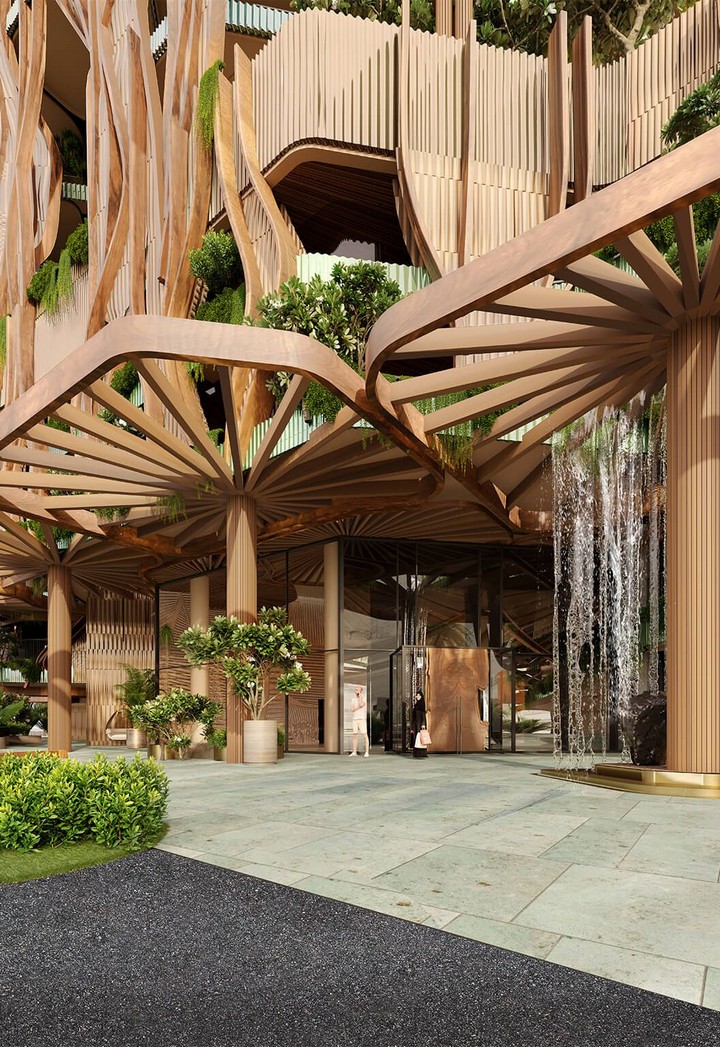
Breaking away from the rigid rectangular boxes that dominated 20th-century skylines, contemporary high-rises increasingly embrace parametric design, a computational approach that generates complex, organic geometries impossible to achieve through traditional drafting methods.
These buildings feature flowing curves, twisted forms, and sculptural silhouettes that challenge conventional notions of what a skyscraper should look like. Computer algorithms optimize every aspect of the design, from structural efficiency to solar orientation, creating forms that are both beautiful and highly functional.
The parametric approach allows architects to respond intelligently to site-specific conditions. Wind flow patterns inform building shapes that minimize turbulence at ground level. Solar studies determine facade articulation that maximizes natural light while reducing heat gain. The resulting structures appear effortlessly elegant while representing thousands of hours of computational optimization and engineering refinement.
3. Mixed-Use Vertical Communities
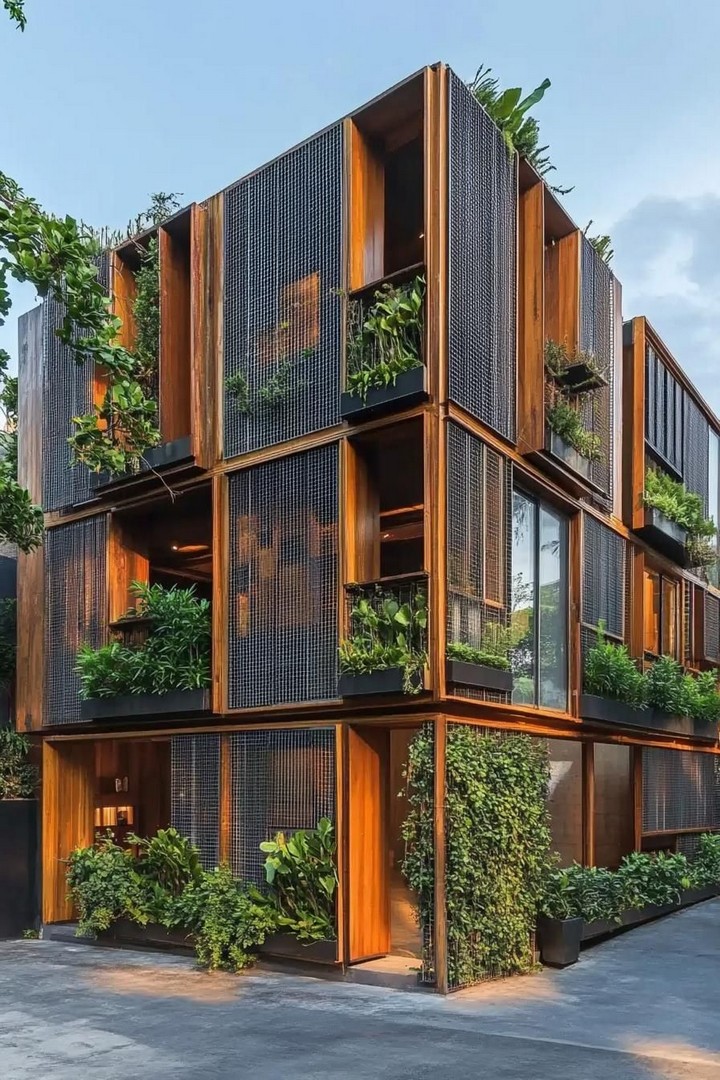
Modern high-rise architecture increasingly embraces the concept of vertical urbanism, where a single tower functions as a self-contained community with diverse programming distributed across multiple levels. This approach creates “cities within buildings” that integrate residential units, office spaces, retail establishments, recreational facilities, and cultural venues.
This mixed-use philosophy responds to contemporary urban planning priorities: reducing commute times, maximizing land efficiency in dense cities, and creating vibrant 24-hour communities rather than single-use districts that empty after business hours. Strategic program distribution ensures natural segregation between public and private spaces while encouraging interaction and community building among diverse user groups.
These vertical communities feature sky lobbies, elevated public plazas, and transitional zones that serve as social condensers. Sophisticated vertical transportation systems with destination-dispatch elevators efficiently move thousands of people daily while minimizing wait times and energy consumption.
4. Transparent and Dematerialized Facades
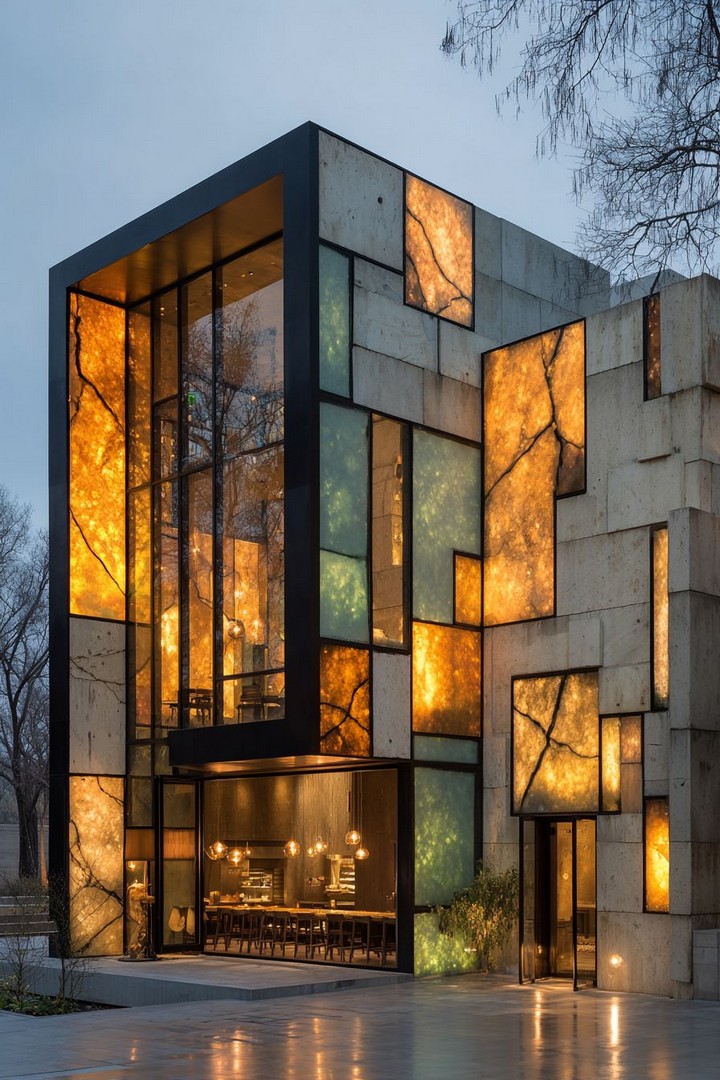
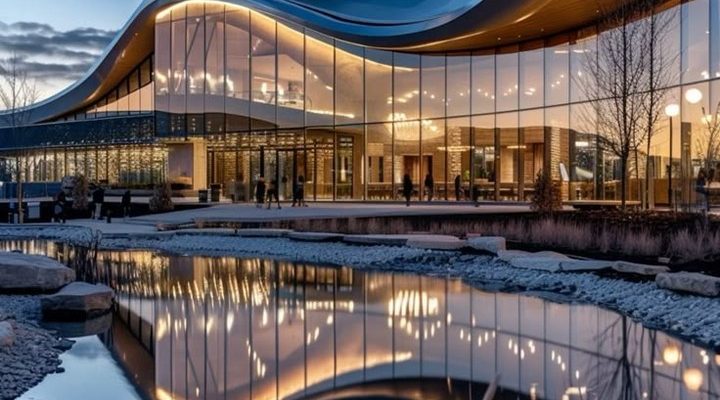
Contemporary curtain wall technology has evolved to create unprecedented transparency in high-rise design. Ultra-clear, low-iron glass combined with minimized framing systems creates facades that appear to dematerialize, offering unobstructed views and visual connections between interior and exterior environments.
This transparency serves both functional and philosophical purposes. Physiologically, it maximizes natural daylight penetration, reducing artificial lighting needs and improving occupant wellbeing. Psychologically, it dissolves barriers between interior spaces and urban contexts, making occupants feel connected to their surroundings despite being hundreds of feet above street level.
Advanced glass technology addresses thermal and solar control challenges through specialized coatings that selectively filter wavelengths, maintaining transparency while managing heat gain. Triple-glazed systems with gas-filled cavities provide exceptional insulation performance, enabling transparent facades even in extreme climates. Electrochromic “smart glass” allows dynamic opacity control, adapting to changing conditions throughout the day.
5. Cantilevers and Structural Acrobatics
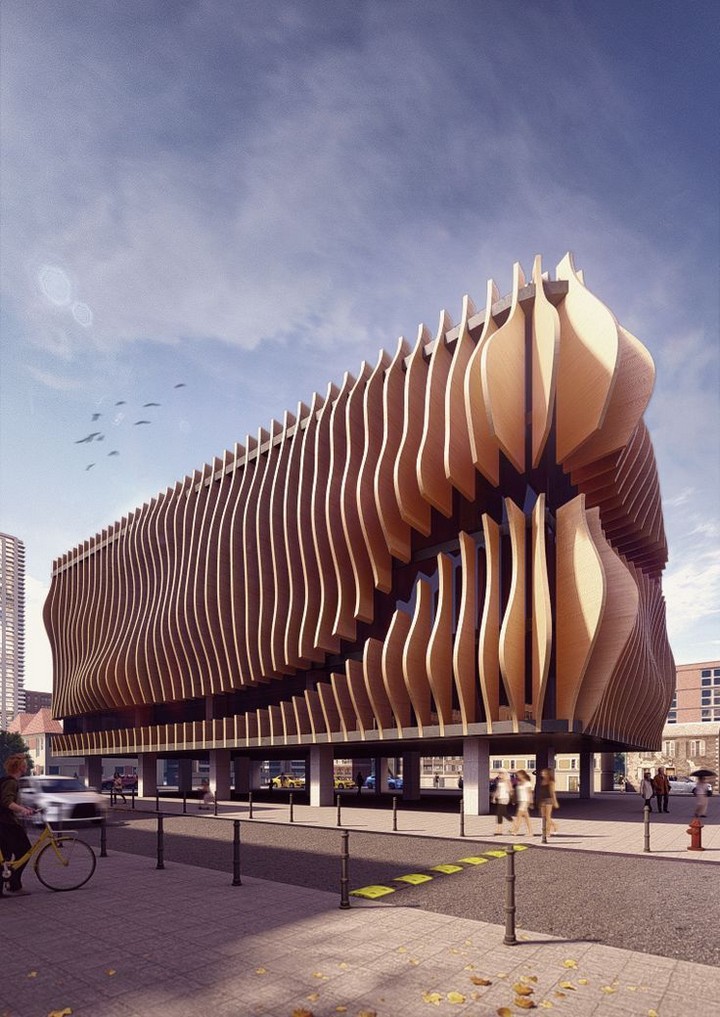
Modern engineering capabilities enable architectural gymnastics that would have been impossible just decades ago. Dramatic cantilevers, suspended volumes, and gravity-defying configurations create visual excitement while demonstrating technical mastery.
These structural expressions serve multiple purposes beyond dramatic effect. Cantilevered volumes create weather-protected outdoor spaces, shade lower floors, and maximize floor area while respecting setback requirements. Suspended elements reduce foundation loads and allow preserved public spaces at ground level.
Achieving these bold gestures requires sophisticated structural systems: post-tensioned concrete slabs, high-strength steel moment frames, outrigger systems that transfer loads to core walls, and advanced computational modeling that predicts behavior under multiple load scenarios. The engineering becomes architecture, with structural expression contributing to aesthetic identity.
6. Adaptive Reuse and Facade Retrofitting
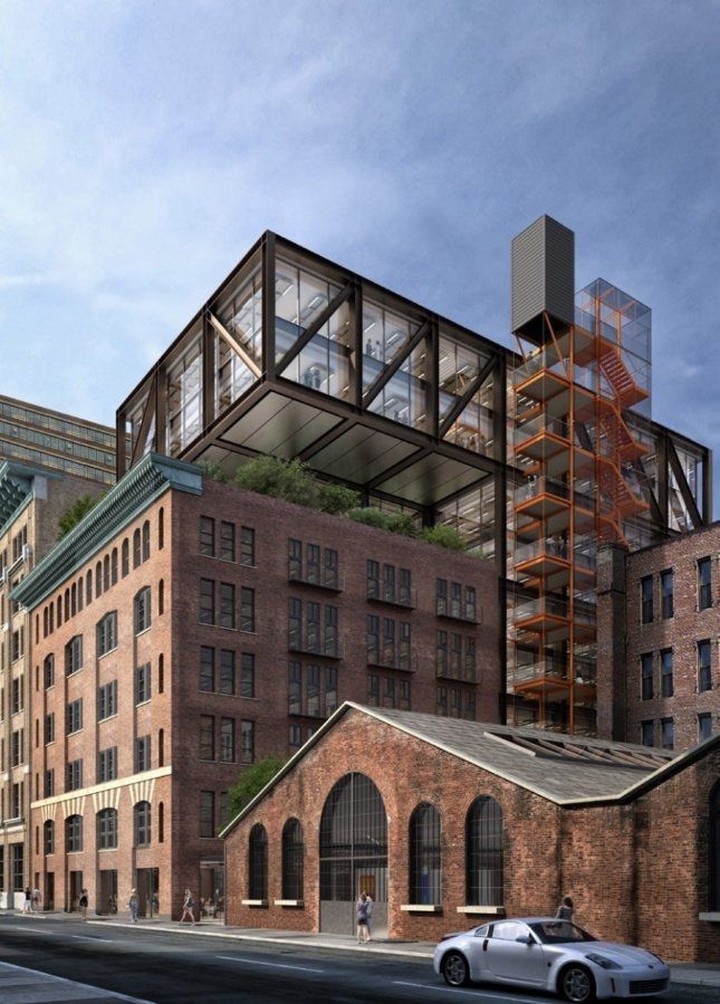
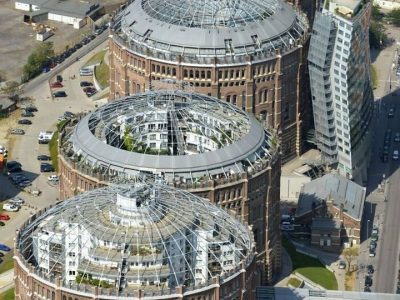
Sustainability concerns and cultural heritage preservation have inspired innovative approaches to existing high-rise stock. Rather than demolition and replacement, architects increasingly embrace adaptive reuse strategies that preserve structural bones while completely transforming performance and appearance.
Facade retrofitting involves removing outdated curtain walls and replacing them with high-performance systems that dramatically improve energy efficiency, acoustic performance, and interior comfort. These interventions can reduce operational energy consumption by 50% or more while modernizing aesthetics and extending building lifespan for decades.
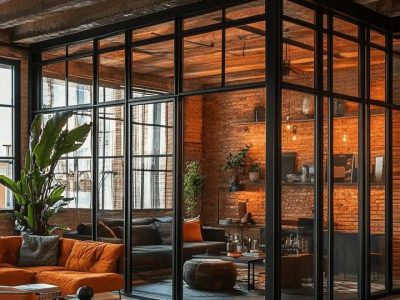
Interior reconfiguration adapts obsolete office layouts to contemporary workplace standards or converts commercial buildings to residential use, responding to shifting urban real estate dynamics. This approach embodies circular economy principles, minimizing embodied carbon associated with new construction while maintaining urban fabric continuity.
7. Supertall Engineering and Aerodynamic Optimization
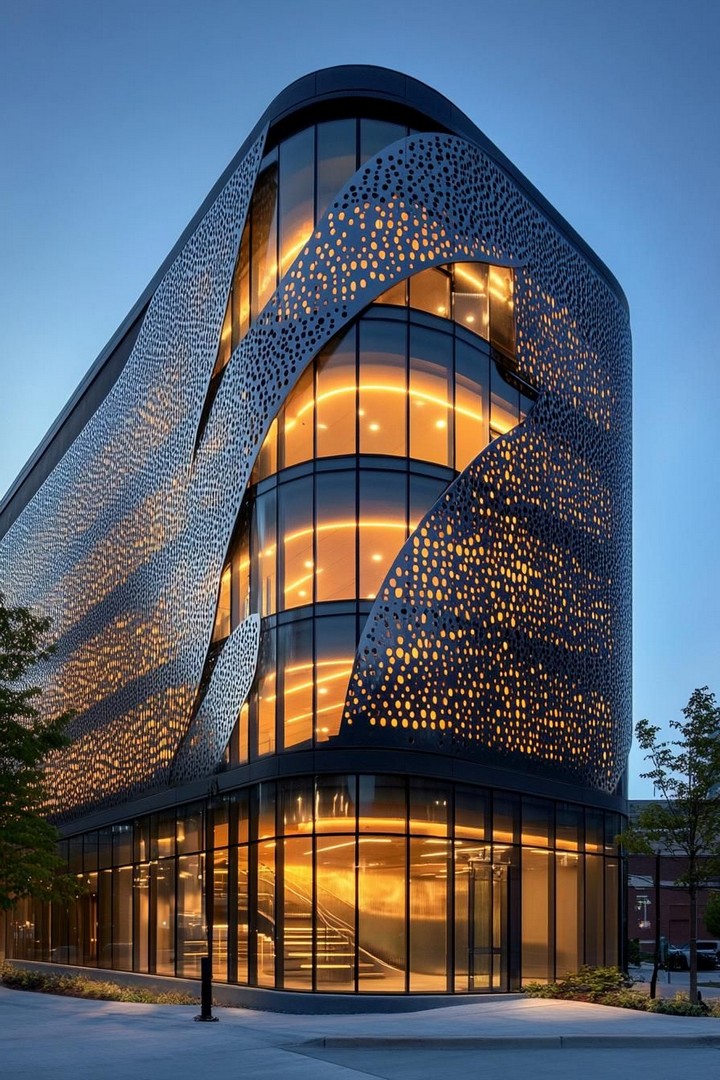
As buildings reach unprecedented heights, exceeding 400, 500, or even 600 meters, wind forces become the dominant design consideration. Modern supertall towers employ sophisticated aerodynamic shaping to minimize wind-induced motion and structural loads.
Wind tunnel testing reveals how building forms interact with air currents, informing modifications that reduce vortex shedding, minimize resonance, and improve stability. Tapered profiles, chamfered corners, and facade articulation disrupt regular wind patterns. Some designs incorporate apertures or “skyholes” that allow wind to pass through the building, dramatically reducing lateral forces.
Supertall structures require innovative damping systems, tuned mass dampers, liquid dampers, or active control systems, that counteract wind-induced oscillations, ensuring occupant comfort even during extreme weather events. These engineering solutions enable habitable space at altitudes previously considered impractical.
8. Modular and Prefabricated Construction
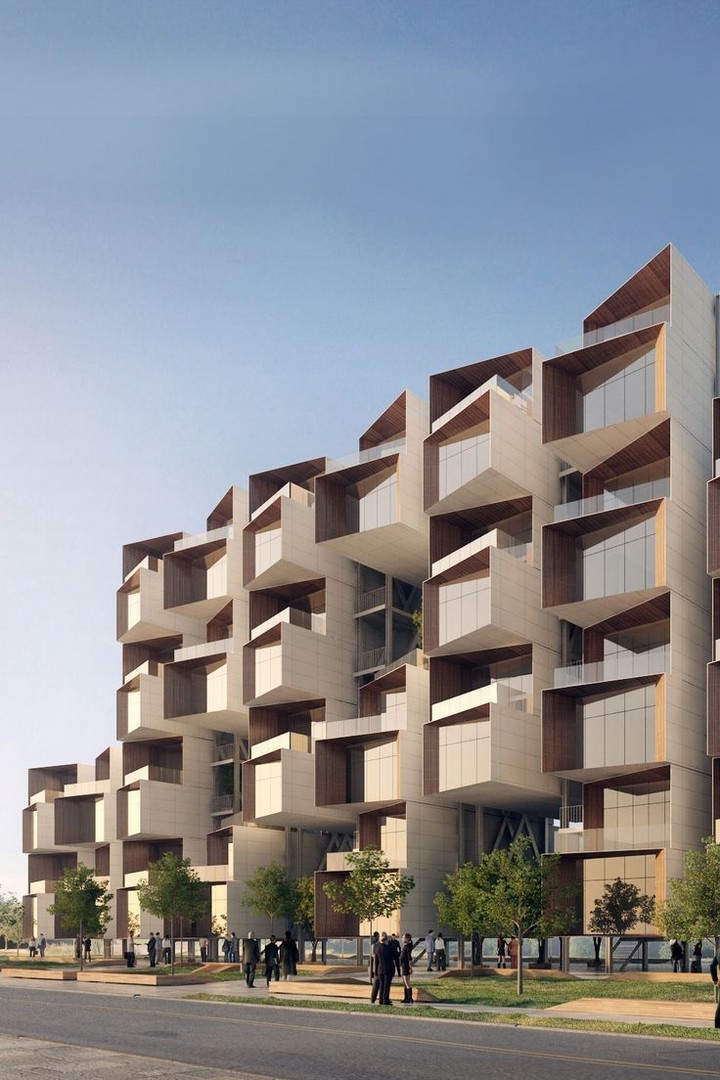
Construction technology innovation is revolutionizing how high-rises are built. Modular construction approaches fabricate complete room modules in controlled factory environments, then stack and connect them on-site like precision building blocks.
This methodology offers substantial advantages: accelerated construction schedules reducing financing costs and market risk, improved quality control in climate-controlled factories, reduced site waste and environmental impact, and enhanced worker safety with less high-altitude work.
Prefabricated facade panels, volumetric bathroom pods, and integrated MEP (mechanical, electrical, plumbing) cartridges streamline construction sequencing. Buildings that traditionally required three to four years of construction time can now reach completion in half that duration, fundamentally changing development economics and project feasibility.
9. Net-Zero and Energy-Positive Design
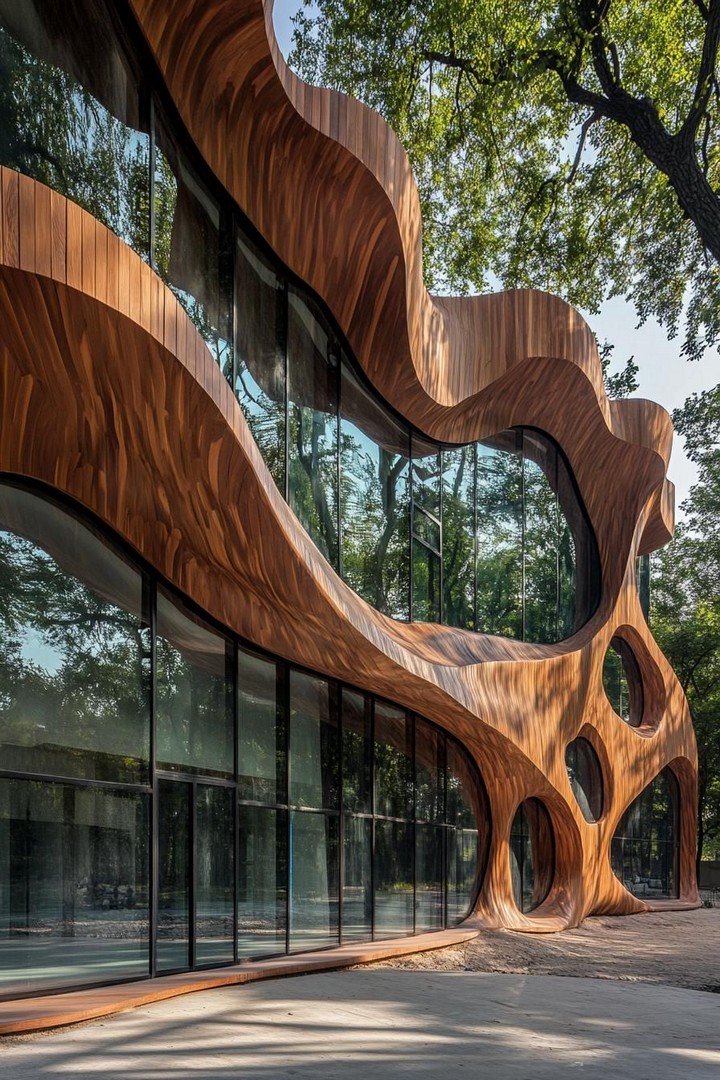
The most progressive modern high-rises aspire to eliminate or even exceed their operational energy consumption through integrated sustainable design strategies. These buildings combine passive strategies, optimal orientation, natural ventilation, daylighting, with active systems including photovoltaic arrays, geothermal heat exchangers, and cogeneration plants.
Energy modeling throughout the design process identifies optimization opportunities. High-performance envelopes minimize thermal transfer. Efficient HVAC systems with heat recovery reduce conditioning loads. Intelligent building management systems continuously optimize performance based on occupancy patterns and weather conditions.
Water conservation strategies incorporate rainwater harvesting, greywater recycling, and low-flow fixtures. Material selection prioritizes recycled content, regional sourcing, and low embodied carbon. Green roofs and bioswales manage stormwater runoff. The result is a high-rise that operates in harmony with rather than opposition to environmental systems.
The Future of Vertical Architecture
These nine architectural approaches represent current best practices in high-rise design, but the field continues evolving rapidly. Emerging technologies, advanced materials like carbon fiber composites and self-healing concrete, artificial intelligence for design optimization and building operation, drone-based construction assistance, and augmented reality visualization tools, promise to further transform what’s possible in vertical construction.
Climate change imperatives will drive continued innovation in sustainable design. Urbanization trends will increase demand for housing density solutions. Digital culture will influence how buildings integrate technology and respond to connected lifestyles. The high-rises of tomorrow will likely employ combinations of these approaches, creating hybrid solutions tailored to specific contexts and communities.
What’s your take on modern high-rise architecture? Have you experienced any buildings that exemplify these design approaches? Which architectural trend do you find most compelling for the future of our cities? Share your thoughts in the comments below, and don’t forget to explore our other articles on sustainable urban design, architectural innovation, and the future of our built environment. If you found this article valuable, share it with fellow architecture enthusiasts and urban planning advocates in your network!